Tuesday, December 15, 2009

Non-Fiction (Intermediate)


Title: The Lamp, the Ice, and the Boat Called Fish
Author: Martin, Jacqueline Briggs
Illustrator: Krommes, Beth
Publisher & Date: Houghton Mifflin Company, 2001
Genre: Non-Fiction
Age Range: 2nd-5th grade
Summary: This book is based on a true story about a voyage to the Canadian Arctic. there are lots of people on this boat including an Inupiat family and Inupiat hunters. Even with the knowledge and skills the Inupiat people have of survival techniques, the crew's survival in the Arctic conditions seem very slim.
Response: This book was very hard to get into. It seemed like it kept dragging on and on. The illustrations were very captivating and did an excellent job supporting the story. It is written in a somewhat poetic manner. The thing that I liked about the book was at the end, the author listed the passengers, the crew, and the animals that were aboard the ship. There are also some photographs of some of the actual passengers. I also liked how the back cover of the book is a map showing the path the ship took.

Non-Fiction (Intermediate)


Title: The Great Expedition of Lewis and Clark
Author: Edwards, Judith
Illustrator: Comport, Sally Wern
Publisher & Date: Farrar Straus Giroux, 2003
Genre: Non-Fiction
Age Range: 4th-6th grade
Summary: This books tells the journey of Lewis and Clark. It is told by a man who is apart of the Corps of Discovery, named Private Reubin Field. It tells of the struggles they faced and the difficulties the encountered. It tells of all the different people they met along their journey.
Response: this illustrations in this book remind you of the time period the expedition took place. The illustrations helped you capture the events of that time very well. I really liked all the facts and history stuffed in this book. This would be a good book to use in a social studies class. Teachers need to be sure that all the statements in this book are factual before using it though.

Non-Fiction (Primary)


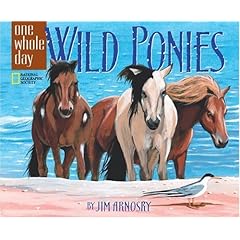
Title: Wild Ponies
Author: Arnosry, Jim
Publisher & Date: National Geographic Society, 2002
Genre: Non-Fiction
Age Range: K-2nd grade
Summary: This book tells what the wild ponies and other animals on Assateague Island do all day.
Response: This book is a very primary information book. It uses rhyming on each page to make it easier for younger children to read and understand. The text is very large and not very much text is placed on each page. I chose this book because I love horses, and I have actually been to Assateague Island. At the end, in the author's note, it gives some more information about the island and the animals that inhabitant it.

Non-Fiction (Primary)


Title:The Librarian of Basra
Author: Winter, Jeanette
Publisher & Date: Harcourt Inc, 2005
Genre: Non-Fiction
Age Range: 1st-4th grade
Summary: The library in Basra, Iraq was a place where people met to discuss earthly and spiritual matters. But, then their discussions became only about war. The librarian asked the governor if the books could be moved so that they would not get destroyed during the war. He said no, but the librarian secretly transported the books to a neighboring restaurant. Nine days later her library got burnt to the ground. She moved all 30,ooo books to her house and she dreams of a new library where her books will be safe.
Response: Although there are not many words per page, this is a powerful story. It is very relevant to today's current situations in the war, but it is from an Iraqi's perspective. This librarian cared so much for her books. She was able to save about 70% of her books. These people live in fear wondering when the next attack will come. I think this book would be great to help children understand how the Iraqi people's lives have been changed because of all the attacks. It also shows children how much these people value books. I really enjoyed the illustrations and use of colors.

Monday, November 16, 2009

Biography


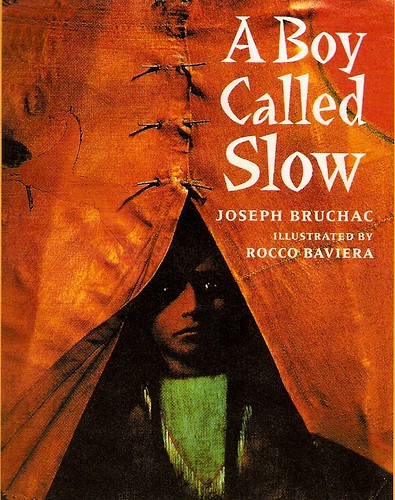
Title: A Boy Called Slow
Author: Bruchac, Joseph
Illustrator: Baviera, Rocco
Publisher & Date: Philomel Books, 1994
Genre: Biography
Age Range: 2nd-5th grade
Summary: Every Lakota Indian is named when they are born, by how they act as a child. When Returns Again's son was born, they noticed that he was slow to react, so his name became Slow. He was teased when he was older and did not like his name. So, in order to change his name, he had to do a great deed or win a major victory. When he was 14, he went with his father on his first war battle. Because of him, his tribe was able to obtain many more horses and supplies because of his victory in the battle. Because of this victory, they named him Sitting Bull.
Response: This biography read more like a story than the typical boring biographies. I could see how this could be a beneficial book when talking about Native Americans. The book incorporates many Indian words in the context of the story with it's meaning. With this biography, children would learn a lot about the Lakota Indian culture.

Biography


Title:How Ben Franklin Stole the Lightning
Author: Schanzer, Rosalyn
Publisher & Date: Harper Books, 2003
Genre: Biography
Age Range: 1st-4th grade
Summary: This book discusses Benjamin Franklin's life and all the things that he invented. It then discusses the invention he is best known for, the lightning rod. He took the time to understand everything about electricity to help benefit mankind.
Response: This is a great child friendly biography. It allows children to understand all the great things Ben invented. The illustrations really enhance and compliment the story of his life. This would be an awesome book to use in a science or history class. Most biographies are really dry, but this illuminates Ben's life, making it much more colorful and alive.

Wednesday, October 28, 2009

Graphic Novel


Title: The Legend of Hong Kil Dong: The Robin Hood of Korea
Author: O'Brien, Anne Sibley
Publisher & Date: Charlesbridge, 2006
Genre: Graphic Novel
Age Range: 1st-4th grade
Summary: Kil Dong was born to a minister, but In Hyung was destined to the position of minister and Kil Dong was just a low life. He wanted to find his place in the world that he was destined for. Everyone teased Kil Don and he couldn't take the humiliation, so he went to a monastery and studied with them. The ancient sage took him as his disciple, teaching him martial arts and magic. He went back home and everyone started spreading rumors that he was a criminal. He left for the mountains and lifted a rock that no one else could possibly lift and the people saw that heaven had sent them a leader. Kil Dong did not like to see injustice and adversity. So, he taught these people fighting skills and battle strategy. They went into several provinces and stole from the rich and gave to the poor. He finally goes to King Se Jong and tells him of all the corruption in his land. The King makes him a minister and he and his bandits sailed to an island to create a just a virtuous society.
Response: This is a great book to teach children about the Korean culture. In the back of the book, it talks about that author and the legend and Korean words and meanings. This book's style is very easy to read and follow. This book would definitely attract boys to reading. Also it brings about the idea of countries having injustices. I know when I was a kid, I thought that everyone grew up like me. So, this book would point out that there are problems in every country.

Poetry

Title: Blues Journey
Author: Myers, Walter Dean
Illustrator:
Myers, Christopher
Publisher & Date:
Holiday House, 2003
Genre:
Multicultural Poetry
Age Range: 2nd-5th
Summary:
The author is writing about blues music and what it means to him. He is trying to describe blues music while writing in a similar format that a blues song lyrics would be written.
Response:
One thing I liked about this book was that it gives you a background about blues music and how it is related to poetry. So, it kind of gives you some help understand how the poem is written. I really liked the illustrations because on each page, some element of the picture is blue, whether it be a person, a group of people, or the sky above them. Also, in the back of the book, it has a Blues glossary. It gives you common phrases used in blues music and tells you what is meant by this phrase. This would be very helpful for students to understand blues and the culture that it came from. I think the glossary in the back is even more helpful because it helped me understand parts of the poem. Wouldn't it be nice if ever poem book had one of these!

Realistic Fiction


Title: Because of Winn Dixie
Author: DiCamillo, Kate
Publisher & Date: Candlewick Press, 2000
Genre: Realistic Fiction
Age Range: 3rd-6th
Summary: Because of Winn Dixie is a great book. Opal and her father, who is a preacher, moved to another town in Florida. Because she is new, she doesn't have very many friends. She was going to the store to get some groceries for her dad, when she sees a stray dog that is about to get in a lot of trouble. She tells the manager that it's her dog and it's name is Winn Dixie. He believes her and asks them to leave. Her dad lets her keep him and he goes everywhere with Opal, even to church. She makes friends with the librarian, Miss Franny and gets a job at Gertrude's Pet Store working off a collar and leash for Winn Dixie. She makes friends with Gloria Dump, who everyone thinks is a witch. They throw a party and there is a thunderstorm, which terrifies Winn Dixie. Opal and her dad search for Winn Dixie and come to find out he was just hiding inside of Mrs. Dump's house where they continue the party.
Response: This is a great book. It was very entertaining and I am sure that any child can relate to it in some way. Whether they are new to town, or are having trouble making friends. Some could relate to having a best friend in an animal. Others could be struggling with loosing a parent and growing up in a single family home. This book has a lot of offer and should be on every teachers bookshelf.

Tuesday, October 20, 2009

Utopian / Dystopian

Title: Gathering Blue
Author: Lois Lowry
Publisher & Date: Houghton Mifflin Company, 2000
Genre: Utopian / Dystopian
Age Range: 6th grade & up
Summary: The main character Kira, was born with a twisted leg, and so she must drag it around with her everywhere. In the village where she lives, most defective people are taken to the field and the beasts drag them away. So, in this village, they only want the pure and the best. But Kira's mom stands up for her, defending her and how she has a place in the village. Kira, at a young age was helping in the Weaver's building. Also, Kira's father was killed when she was still in her mother's womb. He was on a hunt and she was told that the beasts killed him. Near the beginning of the book, Kira's mother becomes sick and they take her down to the field. Kira sits with her mother until her spirit is gone. But Kira has no where to go because after one has an illness they burn the house, so the illness does not spread. People in the village want her gone, but there is a trial held by the Guardians and they decide to let her stay in the Edifice and she is now to become the Weaver of the Robe. She learns to dye thread from Annabelle, an older woman who lives on the outer part of the village. Annabelle teaches her all kinds of weeds that will help her to dye threads different colors. She finds out one day that Annabelle is dead, after Annabelle tells her there are no beasts in the forest. So Kira is on her own. They build her a station to dye and dry the threads and a garden to grow the herbs. She makes friends with Thomas, who also lives in the Edifice; he is the Carver. They both stumble across the little girl who is training to be the next singer. She finally dyes all the threads and replaces worn and torn places on the robe. It is ready for the Singer to wear it proudly. There is a part of the back of the shoulders where she will thread the future. Matt wanders off for a couple of days and she becomes worried. He arrives the day of the singing and he has a present. He has brought back some blue, which is only found in the found across the boundary. Matt also brings back a blind man. Kira finds out that this blind man is her father and that someone in the Edifice didn't want him to become a guardian and tried to kill him. Little do they know he is alive and living in a village where there are others who are broken and hurt. They are welcome there and her father wants her to come back with him, to a place where she will be welcome. Matt goes back with her father, but Kira has a job to do and she decides to stay. Maybe one day Kira will return to her father in the other village!
Response: This was a great book! It was very easy to read and follow. It has just enough suspense to make you want to continue reading to see what happens next. At the end of the book it leaves you wondering if she is staying at the Edifice to prove someone wrong that her father is alive. It makes you wonder what she is going to thread on the robe. It also makes you wonder if she ever will return to her father. The other thing I keep thinking about is how and if she is going to try to help Jo, the future Singer, escape or what. This would be a good book to do several activities with. You could talk about death rituals in different cultures, because in their village, the ill are taken to the Field of Leaving. You could also study dying and the different plants that were mentioned in the book.

Science Fiction

Title: June 29, 1999
Author: Wiesner, David
Publisher & Date: Clarion Books, 1992
Genre: Science Fiction
Age Range: K-3
Summary: A little girl, Holly, decides to try an experiment. She launches vegetable seedlings in the air, trying to discover where they will end up and what will happen to them. A few days later, gigantic vegetables are landing everywhere in the United States. Holly was excited to have such obvious evidence that her experiment worked, but she began to see vegetables that weren't on her list. She pondered where these vegetables came from, and realized that they weren't from her seedlings. At the end of the book, you find out that a starcrusier was touring the sixth planet and accidentally released their entire supply of food.
Response: This was a very creative book that I think many children will enjoy. Because the copyright is in 1992, it makes me wonder if the author just chose a random date in the future to write this story about. I would think that until June 29, 1999, any children that read this book could have questioned whether this would actually happen on June 29,1999. But now that that date has past, I think it is a fun book to read about, knowing that it can't happen. This book lists several vegetables and cities where they fell, so this would be a good opportunity to review and teach children their vegetables and find out where all the cities are located.

Fantasy

Title: Bridge to Terabithia
Author: Paterson, Katherine
Publisher & Date: Harper Collins Publishers, 1996
Genre: Fantasy
Age Range: 4th grade-6th grade
Summary: Jess Aarons is the only boy in his family. Over the summer, he is practicing to become the fastest runner in his class. When he gets the chance to prove it, a new girl that moved next door to him, is allowed to race, and she beats him. At first Jess, doesn't want to have anything to do with her, but as the book progresses, they both become friends. In the woods, nearby their houses, they find an old crab apple tree with a rope attached. They decided to swing across the river and create a made up land called Terabithia. This is the one place where Jess and Leslie can be themselves and not be teased. The are king and queen and spend many afternoons playing in Terabithia. Towards the end of the book, it was raining and had been raining all week, and they couldn't go to Terabithia. Jess and Leslie's art teacher invites Jess for a day at the museum and he accepts the invitation. When he gets back, everyone is very quiet. He finds out that Leslie had drown in the river trying to swing across to get to Terabithia after it had been raining so much. Jess is devastated and doesn't quite know how to handle the situation. Once he realizes she is really gone, he decides to build a bridge across the river. Maybelle, Jess's younger sister who idols him, follows him to the bridge and he names her queen of Terabithia.
Response: This was a great book. I hadn't ever read the book, but I had seen the movie. The movie goes hand in hand with the book. I really liked how easy the book was to read. It just flowed very nicely. Compared to the Tiger's Apprentice, which is also fantasy, this book seemed to be a lot more enjoyable. I think this would be a great book to help children understand how creative they can be. Just like Jess and Leslie, they too can imagine wondrous, make believe places. I think many children could sympathize with the characters. Leslie moved from a place where she was comfortable to a place where no body seemed to like her. Jess had three sisters who teased him and tattled on him. He had to do lots of chores. His father was not present very often. I am sure many children can understand many of the problems the characters face. This book had some good messages in it, and it was a good book to deal with death or bullying. I would definitely recommend this book.


Thursday, October 15, 2009

Fairy Tale

The golden slipper : a Vietnamese legend
Title: The Golden Slipper: A Vietnamese Legend
Author: Lum, Darrell
Illustrator: Nagano, Makiko
Publisher & Date: Troll Associates, 1994
Genre: Fairy Tale
Age Range: K-4
Summary: This is similar to Cinderella, but it is based in Vietnam and their culture. Cam is the name of the girl who is in a similar situation as Cinderella. Her mother passed away and her father re-marries a woman who becomes her step mother who has a daughter named Tam. Cam's father dies and she is left to live with her stepmother and stepsister. Of course, Tam gets everything handed to her and Cam has to work for everything. There is an Autumn Festival that both Cam and Tam can't wait to go to but Cam must do her work in the field before she can go. A woman comes and helps her get her work done and dresses her in silk top and flowing pants just as she had imagined. She goes to the festival on a horse and looses her slipper on the way. The prince tries to find the owner of the slipper, but it won't fit on anyone but Cam. And she goes and lives with the prince.
Response: I liked how the author crossed over the original story of Cinderella and applied it to Vietnamese culture. For example, Cam worked out in the rice fields and she wore silk shirt and flowing pants instead of a ball gown. Instead of a Ball, they go to a Festival. There was a catfish which is important in Vietnamese culture. I think it would be interesting to get your class to read this Cinderella tale and the original Cinderella and compare and contrast the differences understanding some of the important things in Vietnam culture.

Traditional Literature Book

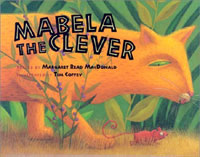
Title: Mabela the Clever
Author: MacDonald, Margaret Read
Illustrator: Coffey, Tim
Publisher & Date: Albert Whitman & Company, 2001
Genre: Folktale
Age Range: K-3
Summary: This story starts off stating that cats are clever and mice aren't. But Mabela, the mouse, was a clever mouse, because her father gave her some advice. The Cat came to the Mouse village to announce that the mice were invited to join the Cat Club but had to be initiated. They were all lined up following the instructions to never look back, always keep marching and singing, and the cat is always in the back. The cat was being clever and kept snatching up the mouse in front of him. Mabela remembered the advice her father gave her and this kept her from being eaten by the mouse.
Response: This book was a classic folktale of good versus evil. It teaches you to listen to you parents and those that are wiser than you. I think it also could send the message to be careful to who you listen to or what information you believe. I think this book could be used for older children as well and incorporating the message: don't always listen to everything you are told. You should have proof that what you are told is in deed fact. For the younger children, I think this would be a great book to emphasis listening to your parents and your teachers.

Traditional Literature Book

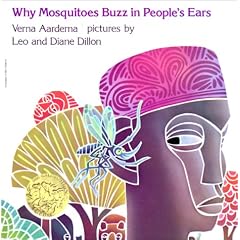
Title: Why Mosquitoes Buzz in People's Ears
Author: Aardema, Verna
Illustrator: Dillion, Leo and Diane
Publisher & Date: The Dial Press, 1975
Genre: Folktale
Age Range: K-3
Summary: This was a good book. The illustrations were great. A mosquito spread the word that a farmer had yams as big as him. Iguana didn't believe him and did not want to hear such lies so he put sticks in his ears. The snake met the iguana and thought that he was mad at him, ignoring him. This trigger several events and the owls' baby got killed. She would not wake up the sun because she was upset. Well, then all the animals told there story and they finally decided that because of the mosquito the owlet was killed. Finally momma owl woke the sun up. The story states that's why mosquitoes are so annoying to people.
Response: I really liked the illustrations. When the story was talking about the owl not wanting to wake up the sun, the background was black to emphasis this point. I really liked that aspect of the artwork as well as the unique style they used. There were several important messages in this book. I feel like the author was trying to show the importance of not to spread lies because of all the trouble it causes. It also tells the story of why people came to not like mosquitoes. I think it also spreads the message that you shouldn't see an action or make an assumption on something because it can be taken the wrong way.


Saturday, September 26, 2009

Historical Fiction Book

Title: Tom's Rabbit
Author: Hooper, Meredith
Illustrator: Kitchen, Bert
Publisher & Date: National Geographic Society, 1998
Genre: Historical Fiction
Age Range: Grades 1-5
Summary:
This book describes a ship voyage to Antarctica. The sailor, Tom, is trying to find a nice, warm place for his bunny to stay on the ship. He visits all the other animals homes, until he finds the perfect place for the bunny to stay.
Response: This would be a great book to help children understand the environment and climate on this ship voyage to Antarctica. It would also familiarize children with the different parts of the ship. It may also send the message that every person has a place in this world, you just have to look for it. It also shows that even people who are away from their families can still have fun and enjoy the holidays with the people and animals around them.

Friday, September 18, 2009

Challenged Book

Title: Crow Boy
Author: Yashima, Taro
Publisher & Date:
Viking Penguin, 1983
Genre:
multicultural picture book
Age Range:
K-3
Summary:
This is a book about a boy who is misunderstood. Everyone calls him Chibi which means "tiny boy" in Japanese. He was left alone during all the activities during the day. He decides to cross his eyes so that he can't see the other children making fun of him. In the middle of the book, he is portrayed as a weird outcast that nobody wants to be around. In the sixth grade, he had a teacher that took the time to talk with him. Chibi performed at the class talent show and his classmates were so impressed by his act. He imitated different crow voices. His teacher then explained that Chibi lived far away and had to walk very far to get to school. After hearing this, his classmates felt bad for wrongly judging him. From that day on, everyone called him "Crow Boy".
Response:
This book won a Caldecott Medal, so the illustrations are very unique. This story was somewhat weird to read. There are moments in the book where the classmates refer to Chibi as stupid. I wasn't really sure about the part where he wanted to go cross-eyed. The author portrayed Chibi, in some parts, as sounding almost retarded. So, I could see where parts of the book might be a bit unusual, therefore, causing it to become controversial and challenged. But, this is a great book to use to encourage children not to judge other people. Like Chibi, a lot of people are in difficult situations and most of them do not know how to handle it and express themselves.

Wednesday, September 9, 2009

Advanced Picture Book

Title: The Magic Fan
Author: Baker, Keith
Publisher & Date: Harcourt Brace Jovanovich, 1989
Genre: cultural picture book
Age Range:
1st - 4th grade
Summary: Yoshi is a builder in his village. After building everything his village needed, he has to brainstorm what he will build next. While he is thinking, he sees a fan floating in the water. It shows him to build a boat that chases the moon, so he does. The fan shows him several other things to build. The last item is a bridge. The villagers are upset when he builds this because it blocks the sun. But, soon a tsunami comes and it saves the people of his village. During the tsunami, he loses the fan and is lost as to what he should build next. He discovers that he doesn't need the fan to tell him what to build next, and he builds new houses for all his villagers.
Response: This was a cool take on this book. Each page has an illustration of a fan and each page has a seperate fan you can turn to show what the fan tells Yoshi to build. It is a very unique and creative style which I think would inspire children. This book also introduces the culture of the fan and it's importance in the Japanese and Chinese culture. With this book, I would have children design and decorate a fan with an illustration of what the fan would tell them to build. This would allow them to use art as well as explore a different culture while using their imaginations.

Advanced Picture Book

Title: The Eleventh Hour: A Curious Mystery
Author: Base, Graeme
Publisher & Date: Harry N. Abrams Inc, 1989
Genre: fantasy, picture book
Age Range: 2nd - 5th grade
Summary: This book used rhyming in a more sophisticated way. Hocare, the elephant, is throwing a birthday party for his 11th birthday. He invites 11 friends and makes all kinds of delicious food and plans all kinds of entertaining games. When all his friends arrive, they see the feast Horace has prepared, but they are not allowed to feast until the 11th hour. So, they play all their games and go to the Banquet Hall and discover that the food is gone. They all denied eating it. Horace makes sandwiches for them all, but at the end of the story, the reader doesn't know who is the culprit. On the last page, the author gives a hint as how to decode the story to discover who ate all the food.
Response: This is a great mystery book for younger children. It still has a story line and is still encouraging children to developing their reading skills by using rhyme. This book makes the students really pay attention to the story line and all the details, especially the illustrations, to discover the mystery. This would be a great book to encourage children to want to read, by having an element of suspense and fun.

Easy Picture Book

Title: My Friend Rabbit
Author: Rohmann, Eric
Publisher & Date: Roaring Book Press, 2002
Genre: picture book
Age Group: K-3
Summary: Rabbit and Mouse are friends. Rabbit throws Mouse's toy plane, but it gets stuck in a tree. So, Rabbit gets the idea to get all the animals he can, stack them up, and use them as a ladder. Just as Mouse reached the plane, all the animals fell, and they were not very happy. But, Mouse was happy because he got his plane. It seems that whatever Rabbit does, trouble follows.
Response: This book is similar to David Wiesner's, Flotsam in that it does not always use words to tell the story. It lets the illustrations act as words. I think this book would be inspiration to those that are artistic, showing them there are outlets where they can express themselves, even in English class.

Easy Picture Book

Title: Flotsom
Author: Wiesner, David
Publisher & Date:
Clarion Books, 2006
Genre: picture book
Age Range: K-3
Summary: This book had no words, yet it was easy to understand the story line. A little boy is at the beach digging in the sand when a wave crashes, knocking him down and washing ashore a camera. So, he finds film inside the camera and takes it to get developed. The pictures he sees are unbelievable. They are fantastical underwater pictures of octopus' reading, seashell castles, and star fish with islands on their backs. Then he discovers a unique picture. The picture is a little girl who is holding a picture. With a microscope the boy can see the many layers of a picture of a picture. At the end of the book, the boy takes a picture of himself holding the picture, and then throws the camera back out into the ocean for it's next discoverer.
Response: This was a really neat book, and I can understand why it won the Caldecott Award. The pictures are extraordinary, and it is very easy to make up the story in your head, as if there were words. This is a very creative story and writing style. I think it would encourage children who are poor writers that there are other ways of telling stories. I think this would be a good book to help children explore this concept of illustrating a story without using words. I think it would encourage them to use their imagination and break down the barriers for many students.

Friday, September 4, 2009

Easy Reader Book

Title: Puppy Mudge Finds a Friend
Author: Rylant, Cynthia
Illustrator: Stevenson, Sucie
Publisher & Date: Simon & Schuster Book For Young Readers 2004
Genre: picture book
Age Range:
3-5 yr. olds
Summary: This is a book about a puppy named Mudge. It describes what Mudge likes to do. Mudge has a friend named Fluffy who is a cat. They like to play together.
Response: With this book, I would ask the children if they have any pets. I would ask them to draw a picture and describe what their pets do all day. This activity would allow the students to use art as well as build a classroom community by participating in show and tell. The students would learn more about their classmates.

Predictable Book

Title: If You Give a Pig a Pancake
Author: Numeroff, Laura
Illustrator:
Bond, Felicia
Publisher & Date: Harper Collins 1998
Genre: picture book
Age Range: 3-7 yrs. old
Summary: This is a very cute story about what will happen if you give a pig a pancake. One thing the pig does reminds her of something else she must do. It continues like this until something reminds her of pancakes again making the reader think the process will start all over again.
Response: This is a very entertaining book, and I think kids would feel the same. If I read this book to my class, I would give them a topic and see how creative they could be using this same technique as this author.

Counting Book

Title: I Knew Two Who Said Moo
Author: Barrett, Judi
Illustrator:
Moreton, Daniel
Publisher & Date: Atheneum Books For Young Readers 2000
Genre: picture book
Age Range: 3-6 yrs old
Summary: This book talked about the numbers 1-10 in a very creative way. Each number had a story about a different animal and a different number. The last word of every sentence rhymed.
Response: This would be a great book to learn about rhyming. It also has a similar idea to the I Spy books where there are sentences giving you clues as to where certain objects are located. It has that similar element, except in a much easier way for younger readers to understand. I think children will gravitate towards this book for that reason. It could also help teach children about different animals.

Alphabet Book

Title: Alphabet Under Construction
Author: Fleming, Denise
Publisher & Date: Henry Holt & Company 2002
Genre: picture book
Age Range: K-3
Summary: This books goes through the alphabet using a phrase for each letter. Each phrase begins with the letter and has something to do with construction. For example, the letter Q is quilting the Q.
Response: This would be a great book to use when teaching children the letters of the alphabet. This would also be a great book to introduce several different art techniques and styles. For example, measuring the M, children could learn about how to measure objects in the classroom. The illustrator of this book, which happens to be the author, used lots of colors and was very creative.